What does the RankTalos Findability Score test in 60 seconds? It reads your public catalog, generates 8 catalog-grounded natural-language requests where at least 2 in-stock products match, runs them on your live search API, checks schema.org/Product JSON-LD and AI crawler rules, and computes four engineering sub-scores (0–100): Semantic & Constraint Recall (30%), Ranking Precision & Honesty (15%), Catalog Attribute Coverage (30%), and AI Crawler & Schema Readiness (25%).
How does the Engine Confidence Badge work? If your store runs Shopify Native Search, Fast Simon, or Constructor, the scanner queries the exact live search API shoppers see and prints a High Confidence badge. If we detect a third-party JS widget (Klevu, Searchspring, Boost) or non-Shopify stack, the report displays a "Partial — JS Widget Detected" badge, scores Catalog Attribute Coverage and AI Readiness live, and offers a free 24-hour Principal-Verified Snapshot of your live search widget.
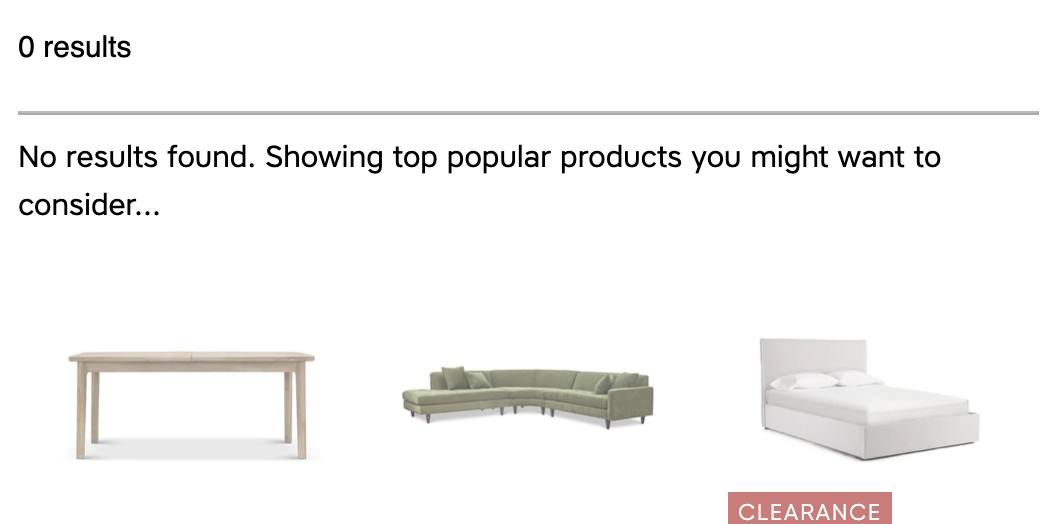
How does the Talos Semantic Search side-by-side preview work? For failed constraint queries, your report shows what your current search returned alongside the exact in-stock products from your catalog matched by our Talos Semantic Engine constraint parser (plus a link to our live 10,000-SKU reference showcase at usafurnish.com).
Will it slow down my store? No. It sends at most 60 polite requests, one at a time with 400–700ms pauses, identifies itself as RankTalos-FindabilityCheck/1.0, and strictly follows your robots.txt.
Where does the revenue-at-risk figure come from? Online revenue × 44% from shoppers who search × natural-language share of searches × measured failure rate (45% in our furniture study, replaced by your store’s own measured failure rate) × 53% who leave after a failed search: about $210K to $525K per $10M of online revenue.